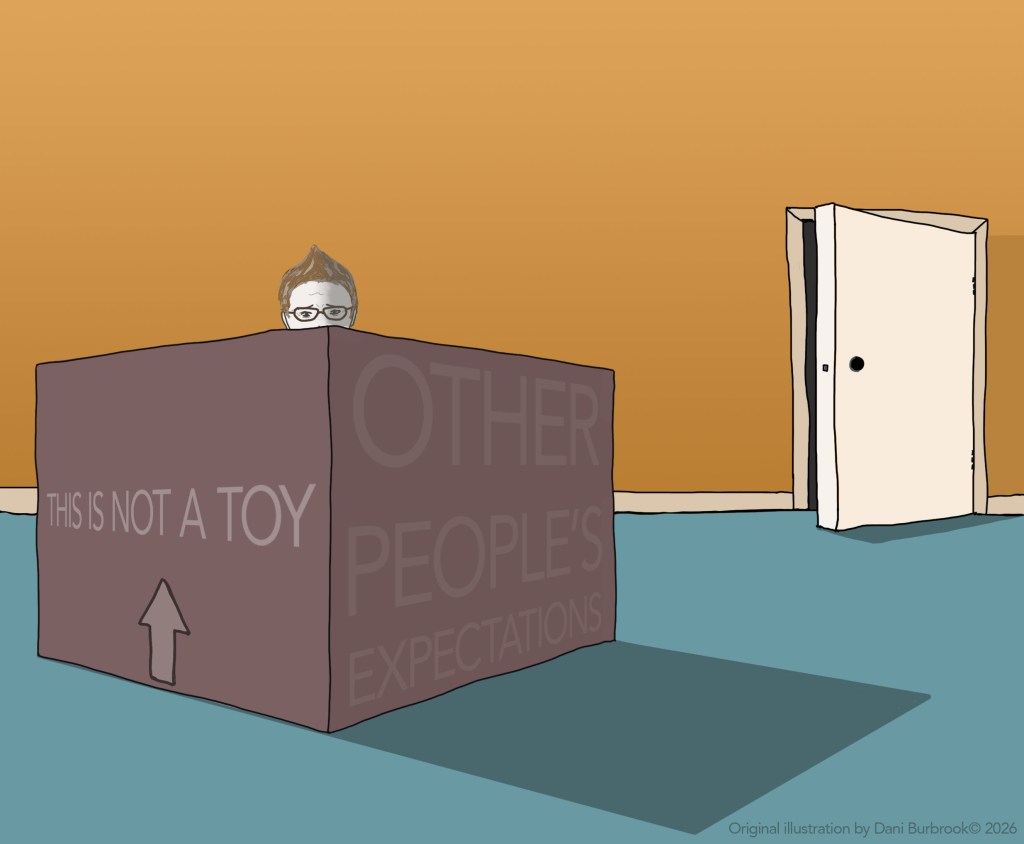
What happens when you realise that your sense of belonging is conditional on you not being yourself.
After ABBA’s ground-breaking 1976 album Arrival was launched in Australia, some friends and I made a habit of spending our lunchtimes huddled around the group listening station in the library. The multi-headphone design allowed us to share a synchronised listening experience. We learned the songs quickly and were often hushed for singing too loudly. We were 7. I have no idea how we all came to be listening to ABBA. I also have no recollection of other things we did, of what we learned or even the names of my companions. This is literally my only memory from school at that time.
The following year, my family moved from that small land locked city to one with ready access to the sea. My first memory of my new school is sitting on some cement steps watching my sister, older by three years, and her new friends playing four square with a tennis ball. I don’t recall if I had made any friends myself at that point. Out of the blue, a boy my sister’s age ran through their game and stole the ball – my sister gave chase. I was horrified and charged off to join the pursuit, yelling angrily that he must return the ball immediately, he had no right, how dare he. My sister was furious. Grabbing me in full flight, she told me to stop, that she and her friends didn’t mind that the boy had run off with the ball, that it was part of the game. Adding to my embarrassment and confusion, my sister told me to go away. I did not understand.
Playing kiss chasey a couple of years later, I again misread the rules. After I chased down Bernard, threw him to the ground and planted an energetic kiss on his lips, he was confused. I remember him, flat on his back, surprised, me straddling him, laughing in victory, as I had seen the boys do. I’m pretty sure he was laughing too, at first. The essential rule of this game that I had missed was that only boys got to chase, to hold down, to kiss. I remember being chastised by the group, particularly by the other girls and while Bernard initially came to my defence, he avoided me after that. I remember the shame – they wanted me to feel shame – but I also recall thinking what a silly rule it was.
As we grow up, all our experiences combine to both shape our perceptions of the world and develop an understanding of where we fit, or don’t fit, within it. The best learning comes with a kind and supportive mentor. Your mum, dad, best friend, teacher, are essentially there to help guide you through the tricky bits, pull you aside when you get something wrong, explain it, help you to reshape the behaviour, suggest some alternatives – all while also letting you know that they think you are a good and worthy person. That’s growing up right? Having a go, getting it wrong sometimes, all the while being guided with love and kindness. Ideal world, I know.
The challenge comes with the realisation that the rigid rules of engagement are not just applied to the basics, like learning how to get along with others, sharing your toys, eating with your mouth closed and using correct grammar. When it becomes apparent that included in the list of policed ways of being will include how you wear your hair, your clothing choices, the colour of your skin, your right to express an opinion, your physical capabilities, how you speak, your body shape and your future aspirations – you begin to realise that unconditional positive regard might just be a myth. Of course when you are a child, you don’t have the language to articulate this, but you know it to be true. It is reinforced every time you are made to feel like you don’t belong because of how you present to the world. Sometimes the message is received directly through criticism disguised as curiosity – “why do you wear your hair like that!?” or “why do you talk like that!?” – and other times it comes through unnarrated acts of blatant social exclusion with the clear message that if you are other, you just don’t belong.
In reality, our hard learnings often come without the safety net of being seen for who we are, the good bits, the different bits and the tricky bits, and being loved anyway. In reality, we may not have an ally by our side.
There are many adaptive strategies that we instinctively apply in order to survive. If we are lucky, our survival instincts are strong, and let’s face it, it is so much easier to make it through the day if you can divert the hostility aimed at you for just being who you are. We come to learn that any innate otherness might be tolerated if we behave and at least try and follow the rules – even the ones that we can never adhere to because they reject who we fundamentally are. There is no guarantee that this compliance will have any lasting effect on minimising the punishing experiences of otherness, but we give it our best.
Some use the quiet approach – “I won’t draw attention, I will make myself small” – others use the humour approach – “if I make them laugh, or laugh at their put downs, they’ll like me” – others, worn down by rejection, use angry indifference – “well I don’t like you either!”. This last strategy comes with the greatest risk of invoking the venom of your tormentors as they rage against your daring to reject them and their rules.
Anyone who is other has most likely used all these strategies at different times in their life.
At some point you realise that even though you thought your otherness would be tolerated if you behave, it’s just not that simple. You come to understand that all your efforts to be alike, to play the game, to stay quiet, to smile, to be nice, to be likable, to not complain or draw attention to yourself, will never engender unconditional positive regard. The threat of being blamed, sidelined, attacked, judged, remains ever present. It is that very threat that aims to keep you compliant. The insistence of sameness, or homogeneity, of following the rules always comes with the imminent threat that any sameness status you think you have attained is not determined by you and can therefore be revoked at any time.
This look alike, act alike, be alike message is amplified not just through mainstream and social media, but through the actions and behaviours of the people around us, the people close to us, the people who we might otherwise reasonably expect to be treating us with unconditional positive regard. It is our families, our friends, our teachers, our communities who amplify one message or another.
When I facilitate wellbeing training sessions for teaching colleagues, the focus begins with the notion of unconditional positive regard. Teaching is first and foremost about relationship. As teachers, we are responsible for fostering communities of respect through positive behaviour strategies that recognise the diversity of each child. Teaching in a state of unconditional positive regard is about teaching belonging. Pair this with our passion and enthusiasm for teaching and learning and we are literally teaching our students how to be, through our every word, action, and response.
Feeling connected, feeling like we belong depends on the extent to which we feel accepted, respected, included and supported by others. Most well-rounded adults don’t want or need your approval, they just want to be treated with respect, to be acknowledged and to have a sense of belonging in their community. It really is that simple.
Dani Burbrook © 2026
TO HEAR A RECORDING OF THIS ESSAY, CLICK BELOW


Respectful comments welcomed